
What Size Generator Does Your Home Need? A Tahoe Homeowner’s Guide
Key takeaways
- 10–14 kW covers Tahoe essentials; 22–26 kW runs the whole house.
- Above 6,200 feet, altitude derating means a generator delivers less than its nameplate — Tahoe sizing is not sea-level sizing.
- The most commonly missed loads: well pumps, EV chargers, hot tubs, and detached-building subpanels.
- A whole-house transfer switch needs a bigger unit; load management runs more on less.
If you’ve started looking into standby generators, you’ve noticed they range from 10 kW units that cover the basics to 26 kW systems that keep the house running like the power never left. So what do you actually need? The honest answer is: it depends on your home. Here’s how we think it through, so you can walk into the conversation understanding what drives the decision.
Start With What Can’t Go Dark
Every sizing conversation begins the same way: when the power goes out, what can’t you live without?
| Coverage level | What stays on | Typical size* |
|---|---|---|
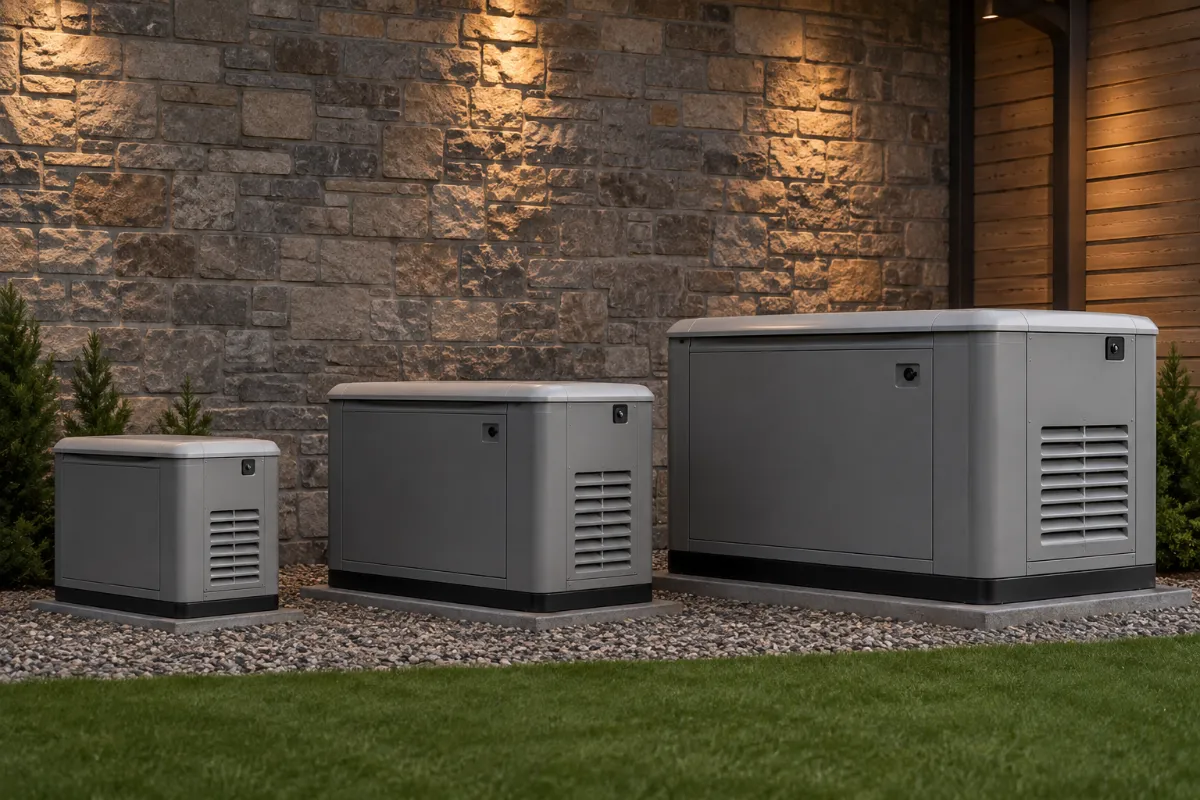
| Essentials | Heat, well pump, refrigeration, lighting, a few key circuits | 10–14 kW |
| Comfort | Essentials plus kitchen, laundry, home office, garage door | 14–22 kW |
| Whole house | Everything — multiple HVAC zones, range, dryer, hot tub, EV charging | 22–26 kW |
*Before altitude derating — which is exactly why the next section matters.
Why Tahoe Sizing Isn’t Like Everywhere Else
Altitude Derating
Generators lose output at elevation. Lake Tahoe sits above 6,200 feet — some surrounding communities higher — and a generator rated 22 kW at sea level does not produce 22 kW up here. Every install we do factors in the derate so the unit delivers what your home demands, not what the spec sheet promises.
Heating Loads
Outages here usually arrive with storms — precisely when your heating works hardest. A forced-air furnace needs its blower and controls powered; electric heat, heat pumps, and radiant circulators draw far more. Undersizing in this climate isn’t an inconvenience. It’s frozen pipes.
Well Pumps
Many properties in and around the basin are on private wells, and well pumps pull a heavy startup surge the generator has to absorb without tripping. It’s the single most overlooked load in DIY sizing math.
The Loads Most People Forget
EV chargers pull 30 to 50 amps. Hot tubs and pool equipment draw more than people expect, especially at startup. Sump pumps and snowmelt systems may be protecting your property during the exact storm that caused the outage. And subpanels in detached garages, shops, and guest houses are forgotten right up until half the property goes dark.
Transfer Switch: Whole House vs. Load Management
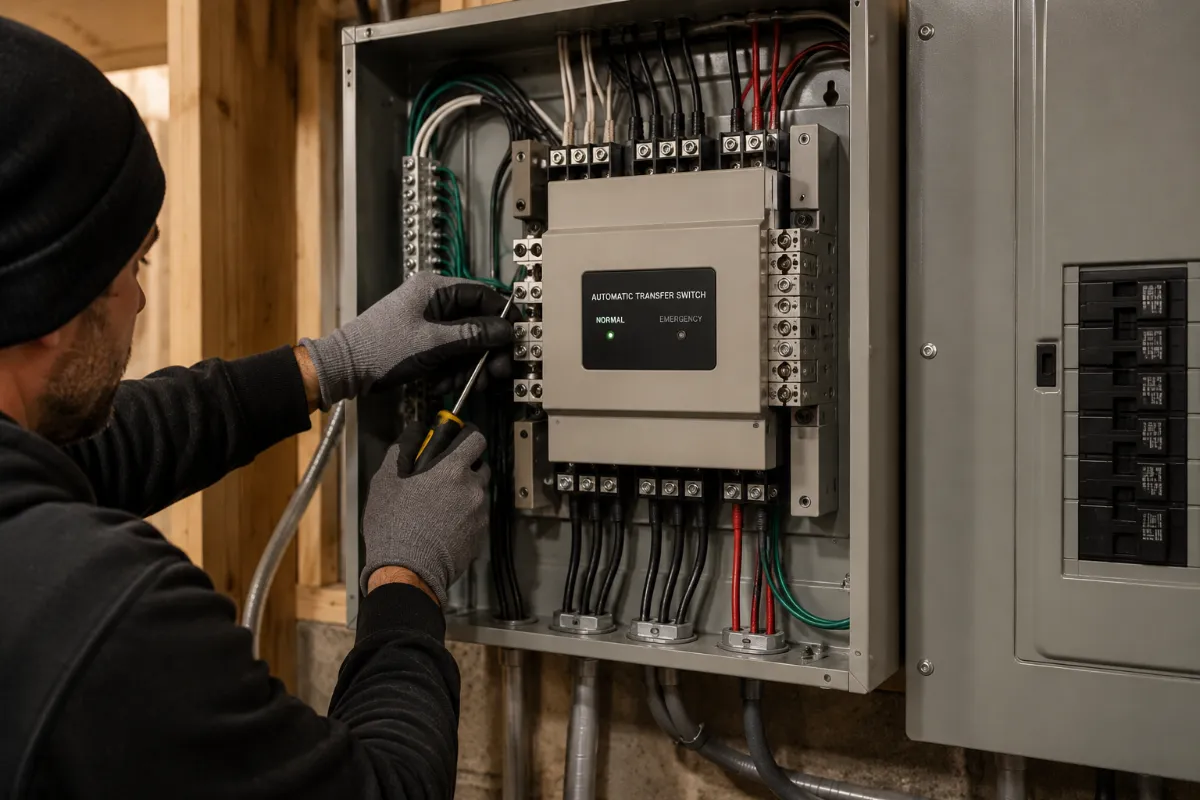
A whole-house transfer switch puts your entire panel on the generator — everything comes back, no decisions. Cleanest setup, biggest unit.
A load-managed system pairs a smaller generator with an automatic transfer switch that prioritizes circuits intelligently — the AC pauses a few seconds while the dryer runs, then picks back up. It’s the smart play when budget or gas supply caps the unit size but you still want broad coverage.
A Note on Fuel
Most Tahoe-area homes have natural gas — continuous fuel, nothing to refill during a three-day storm. Propane works just as well; tank capacity simply becomes part of the design. Either way, gas line sizing is part of a proper proposal, and it’s covered in our breakdown of what a Tahoe generator installation actually costs.
Why the Real Answer Is a Site Visit
Online calculators give you a ballpark. They can’t see your panel, measure your gas line, account for setbacks and snow load, or notice the well pump and the EV in the garage. A proper evaluation produces a real recommendation with a real price — free, no obligation. Want a head start from your couch? Try our Generator Estimator.
Storm season books out fast. Get sized before the weather turns.
Schedule a Site VisitCall (775) 309-9056Quick Answers
What Size Generator Does a Typical Tahoe Home Need?
Most homes land between 10 and 26 kilowatts: 10–14 kW covers the essentials (heat, well pump, refrigeration, lights), while whole-house coverage typically runs 22–26 kW. The deciding factor is a load calculation of your actual house — including altitude derating.
Does Altitude Really Change Generator Sizing?
Yes. Above Tahoe’s 6,200 feet, an air-breathing engine produces meaningfully less than its sea-level nameplate rating. A unit sized from the brochure alone can come up short on the coldest night of the year — every install we do factors the derate in.
Can a Generator Power My EV Charger During an Outage?
It can if it’s sized for it — Level 2 chargers draw 30 to 50 amps, which is a major load. Tell us the charger exists before we size, not after.
Natural Gas or Propane for a Standby Generator?
Natural gas means continuous fuel with nothing to refill — ideal where service exists. Propane works just as well, but tank size becomes part of the design so you can ride out a multi-day storm.