
What Does a Generator Installation Actually Cost in the Tahoe Area?
Key takeaways
- Most standby installs run $10,000–$25,000 turnkey; 22 kW whole-house systems typically land $14,000–$19,000.
- Tahoe consistently prices above national averages — altitude, terrain, snow-load placement, cold-weather kits, and multi-jurisdiction permitting are real scope, not padding.
- The five cost drivers: unit size, pad & placement, panel condition, gas line work, and permits.
- A free site evaluation produces an itemized proposal — equipment, electrical, gas, permits, site work, all broken out.
It’s the first thing every homeowner searches, and the answer usually found — “it depends” — is true but useless. Here’s the better version: the honest range, and exactly what moves a project inside it, so nothing on a proposal ever surprises you.
The Honest Range
Most residential standby installations in our market come in between $10,000 and $25,000 turnkey. A 22 kW whole-house system — the most common choice for a full-size Tahoe home — typically lands between $14,000 and $19,000 installed. Where your project falls in that range comes down to five things.
1. The Generator Itself
Units run from 10 kW essential-circuit systems to 26 kW whole-house machines, and the equipment cost scales with size — which is why sizing correctly matters. You don’t want to pay for capacity you’ll never use, and you really don’t want to discover an undersized unit during the first storm. We install Generac, the industry standard for residential standby power: parts availability, dealer support, and a solid warranty program.
2. The Pad and Placement
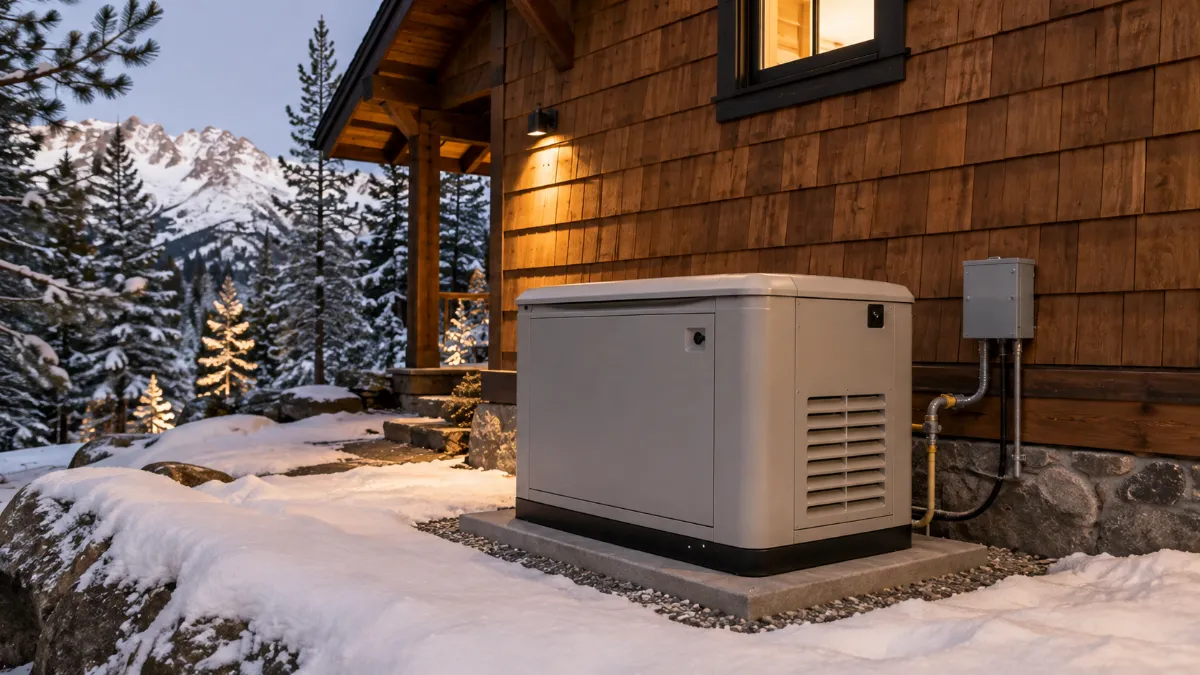
The unit needs a level pad placed to meet setbacks from property lines, windows, and structures — and in Tahoe, placement also has to respect snow load and roof runoff. Three feet of snow burying the intake, or an ice avalanche off the roofline, will end a generator. Some properties have an obvious spot; others need grading or clearing, and where TRPA has jurisdiction, coverage requirements can limit the options.
3. Electrical: Panel and Transfer Switch
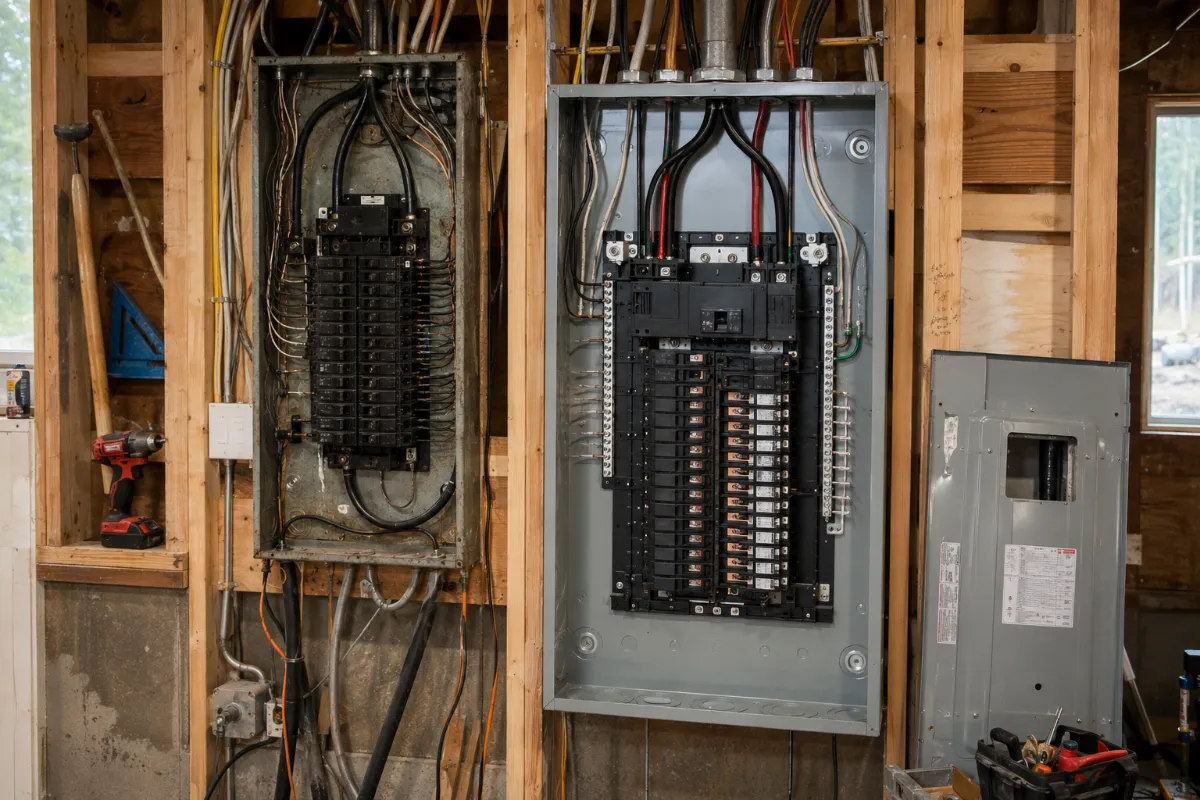
The transfer switch is straightforward when the existing panel is modern and has capacity. Plenty of Tahoe-area homes have older panels at or over capacity — and if yours needs an upgrade to safely support a transfer switch, that’s real additional scope. It isn’t an upsell; it’s code and safety, and we scope it transparently. (Wondering about yours? Here’s when a panel needs upgrading and what’s involved.) Distance matters too: a generator ten feet from the panel is a different wire run than fifty feet and a crawl space away.
4. Gas Line Work
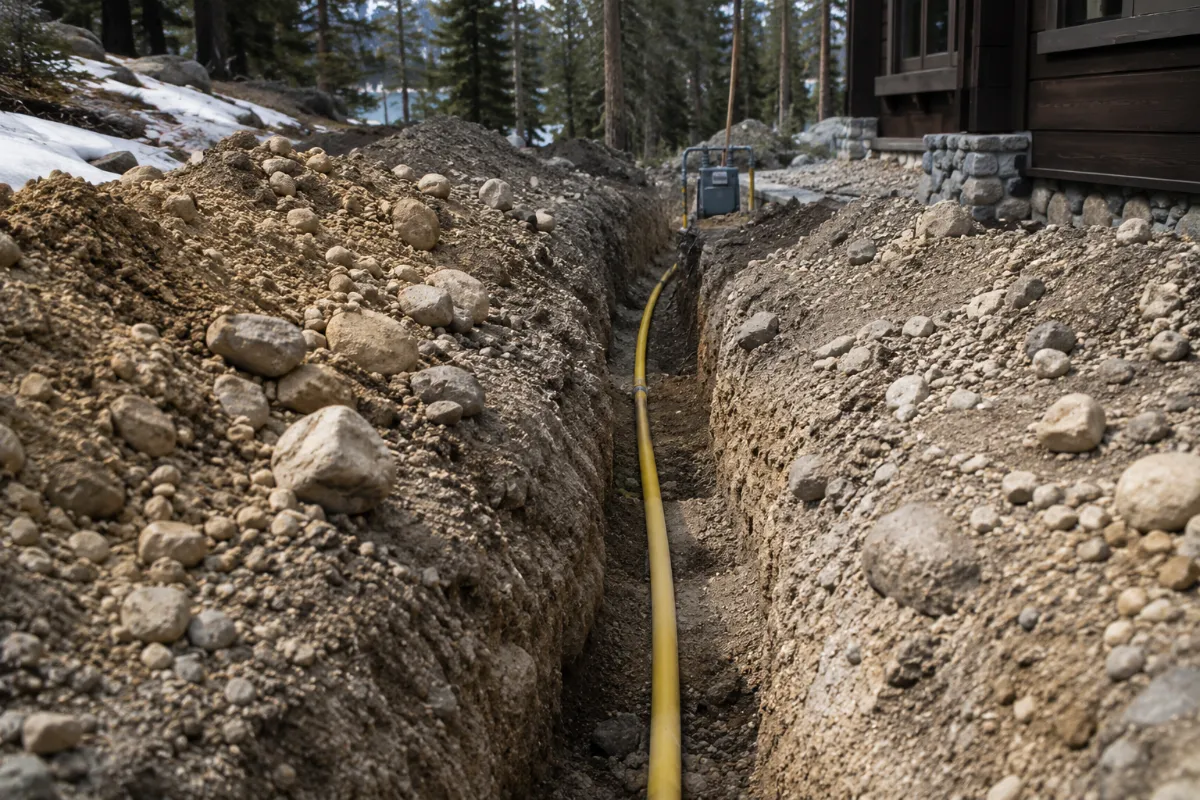
The piece that surprises people most. A generator draws serious gas volume, and it needs a dedicated line from the meter. Cost rides on distance, required line size, and whether your existing meter and supply have headroom left after the furnace, water heater, range, and fireplace. Sometimes the utility has to upgrade the meter. And trenching through decomposed granite is a different job than digging a valley backyard.
5. Permits, Inspections — and TRPA
Every install here is permitted and inspected, often across more than one jurisdiction: county, city, and in parts of the basin, TRPA. Each has its own requirements, timelines, and fees. This is where a licensed local contractor earns it — we know the jurisdictions and handle the whole process. An out-of-area low bid that doesn’t know TRPA is how projects stall on a failed inspection.
The Altitude Line Items
Above 6,200 feet, units derate — the install has to be engineered for real output at elevation, not nameplate. And below-zero starts demand cold-weather kits: battery warmers, heated components, oil management. Up here those aren’t accessories; they’re the difference between a generator that starts in February and one that doesn’t.
About Those Online Numbers
National cost articles average sea-level installs with mild climates, easy access, and single permits. That isn’t this market. Tahoe installs cost more than the national average for the same reason Tahoe roofs and foundations do — building for 6,000-plus feet of mountain winter is simply a different job. The flip side: a system built right for here protects your home through conditions most of the country never sees.
Getting a Real Number
A site evaluation covers the panel, gas capacity, placement, and loads. The proposal comes back itemized — equipment, electrical, gas line, permits, site work — a real number based on your home, not a national guess. Free, itemized, no obligation. Start with the Generator Estimator if you want a ballpark tonight.
Skip the national averages. Get a real number for your actual house.
Get My Free ProposalCall (775) 309-9056Quick Answers
What Does a Standby Generator Cost Installed in the Tahoe Area?
Most residential standby installations run $10,000 to $25,000 turnkey — equipment, pad, gas line, transfer switch, permits, and startup — with 22 kW whole-house systems typically landing between $14,000 and $19,000. Tahoe projects trend toward the upper part of any national range for the reasons in this article. Our Generator Estimator gives you a fast first number.
Why Do Tahoe Installs Cost More Than National Averages?
National figures assume sea-level altitude, mild weather, easy trench digging, simple gas connections, and one permitting jurisdiction. Tahoe has none of those: altitude derating, rocky terrain, snow-load placement rules, cold-weather kits, and often multiple jurisdictions including TRPA.
Is a Panel Upgrade Part of the Generator Price?
Only if your panel needs one. Older or maxed-out panels sometimes must be upgraded to safely support a transfer switch — that’s a code and safety requirement, scoped separately and clearly. Our panel upgrade guide covers when it applies.
How Long Does a Generator Installation Take?
On site it is pad, gas line, transfer switch, generator set, connected and tested — once equipment and permits are in hand. Permitting and utility coordination come first, which is why starting before storm season matters.