
What Does Your Breaker Panel Actually Do? A Homeowner’s Guide for Reno and Sparks
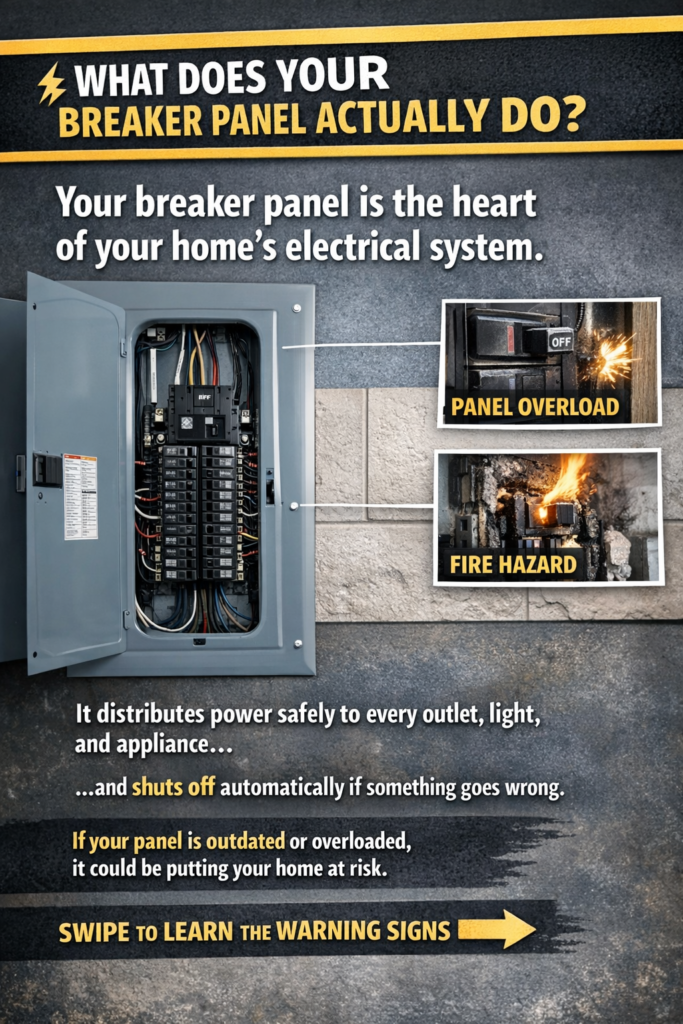
What An Electrical Breaker Panel Does In Your Home
Your electrical breaker panel is the central control point for the electricity that powers your entire home. Every outlet, light fixture, appliance, and device in your house receives electricity through this panel. When power enters your home from the utility provider, it first passes through the breaker panel where it is safely distributed into individual circuits. These circuits send electricity to different rooms and systems throughout the property. For homeowners in Reno, Sparks, and across Washoe County, understanding the role of the breaker panel is important because it not only supplies electricity, it also protects your home from electrical overloads and potential fire hazards.
How Breaker Panels Distribute Electricity To Every Circuit
Inside your breaker panel are multiple circuit breakers that each control a specific electrical circuit within the home. Some circuits supply power to lighting, while others serve outlets, appliances, HVAC systems, or specialized equipment like EV chargers or hot tubs. When electricity enters the panel from the utility service line, it flows through the main breaker and is then divided among these smaller branch circuits. This organized distribution ensures that electricity is delivered safely and efficiently throughout the house. In homes throughout Reno, Sparks, and Spanish Springs, properly functioning circuits allow homeowners to run multiple devices at once without overwhelming the system.
Why The Electrical Panel Is The Heart Of Your Home’s Power System
The breaker panel is often referred to as the heart of a home’s electrical system because every circuit begins and ends there. Just like the heart circulates blood throughout the body, the electrical panel distributes power throughout the house while monitoring the flow for safety. If too much electricity is drawn on a circuit, the breaker automatically shuts off to prevent overheating, damaged wiring, or electrical fires. This built-in protection system is essential for maintaining electrical safety in homes across Reno, Sparks, and the greater Washoe County area, especially as modern households rely on more electrical devices and higher energy demand than ever before.
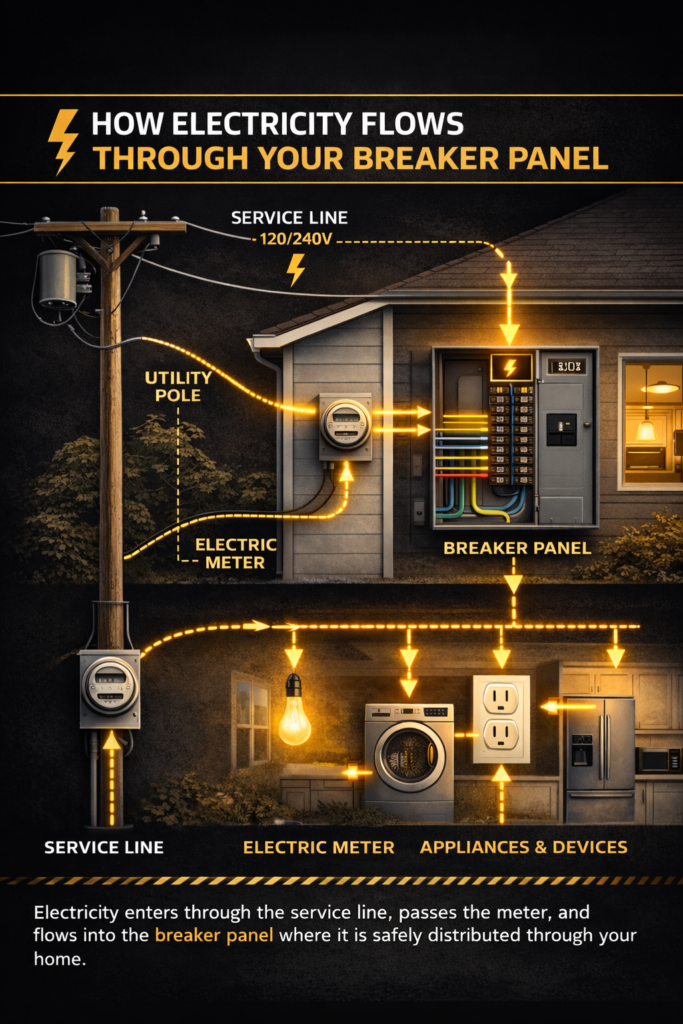
How Electricity Flows Through Your Breaker Panel
Electricity powering your home follows a specific path before it reaches your lights, outlets, and appliances. Power first enters your home from the utility service line and passes through the electrical meter that measures energy usage. From there, it flows directly into the breaker panel, where it is distributed into individual circuits that serve different areas of the house. Each circuit is protected by its own breaker, which monitors the amount of electricity flowing through the wiring. In homes throughout Reno, Sparks, and Spanish Springs, this system allows electricity to move safely throughout the property while preventing circuits from becoming overloaded.
How Power Enters Your Home From The Utility Line
Every home receives electricity from the local utility through a service line that connects the neighborhood power grid to the house. This power first passes through the electric meter and then enters the main breaker panel. The main breaker acts as the primary shutoff for the entire electrical system, allowing electricians to safely disconnect power if necessary. Once electricity enters the panel, it is directed into multiple branch circuits that supply power to different parts of the home. In many Reno and Sparks neighborhoods, especially in homes built decades ago, the electrical service may have originally been designed for lower electrical demand than modern homes require today.
How Breakers Protect Outlets, Lights, And Appliances
Circuit breakers are designed to automatically stop the flow of electricity if something goes wrong. When too much electrical current flows through a circuit, the breaker detects the overload and shuts off the power to prevent wires from overheating. This safety feature helps protect outlets, lighting systems, and appliances from damage while also reducing the risk of electrical fires. For homeowners in Washoe County, working breakers are one of the most important built-in safety protections in a home’s electrical system, especially as households rely on more electronics, appliances, and charging devices than ever before.
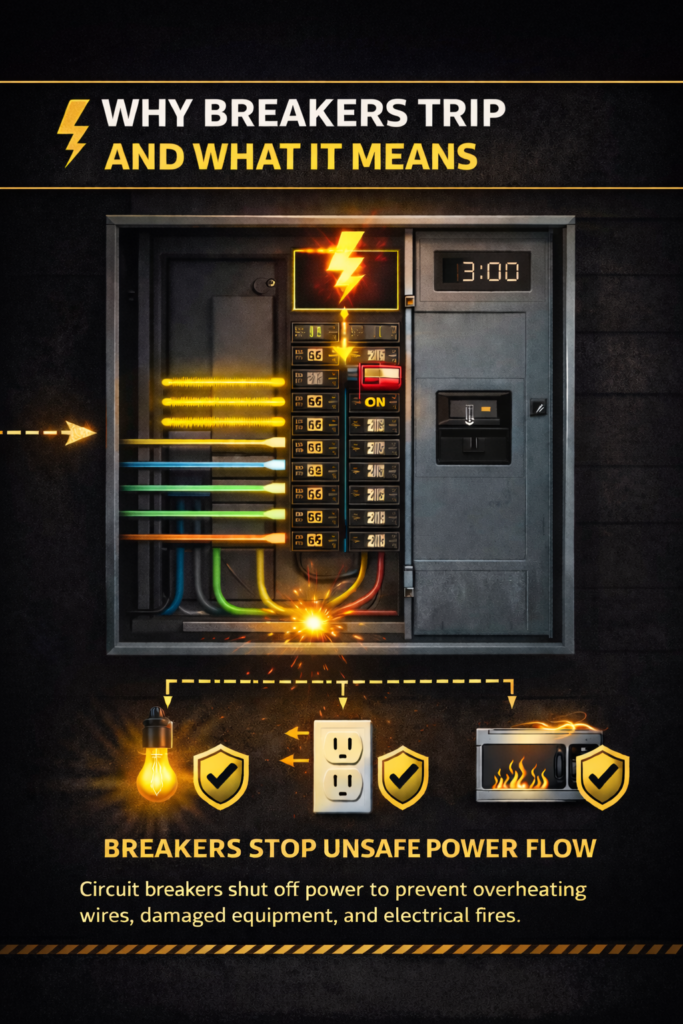
Why Breakers Trip And What It Means
When a breaker trips, it is actually doing exactly what it was designed to do—protect your home and electrical system. Circuit breakers constantly monitor how much electricity is flowing through a circuit. If the flow becomes unsafe, the breaker automatically shuts off power to prevent overheating wires, damaged equipment, or potential electrical fires. Many homeowners in Reno and Sparks notice breakers trip during times of heavy electrical use, such as running multiple appliances, heaters, or air conditioning systems at the same time. While an occasional trip can happen, frequent breaker trips often indicate a circuit that is overloaded, a wiring issue, or an electrical panel that may no longer match the power demands of the home.
Overloaded Circuits And High Power Demand
One of the most common reasons breakers trip is an overloaded circuit. This happens when too many devices are drawing electricity from the same circuit at the same time. For example, running kitchen appliances, space heaters, or power tools together can quickly exceed the safe capacity of a circuit. When this happens, the breaker shuts off power to prevent the wiring from overheating. In many Reno, Sparks, and Spanish Springs homes, especially older houses, electrical systems were designed before today’s higher power demands. Modern appliances, entertainment systems, and charging devices can easily push circuits beyond what they were originally designed to handle.
Short Circuits, Ground Faults, And Electrical Protection
Breakers can also trip when more serious electrical conditions occur, such as short circuits or ground faults. A short circuit happens when a hot wire accidentally touches a neutral or ground wire, causing electricity to flow in an uncontrolled path. A ground fault occurs when electricity escapes the normal circuit and travels through unintended conductive surfaces. Both situations create sudden spikes in electrical current, which can quickly damage wiring or equipment. Circuit breakers immediately shut off power when these conditions are detected, helping protect homes throughout Washoe County from electrical hazards and keeping the electrical system operating safely.
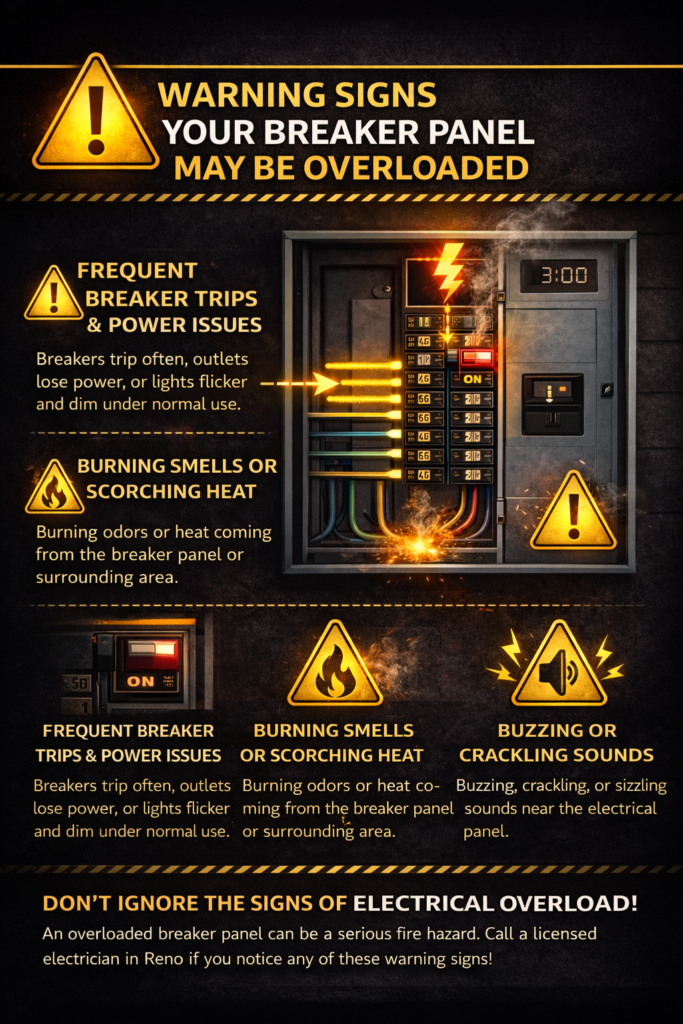
Warning Signs Your Breaker Panel May Be Overloaded
Electrical panels are designed to safely distribute power throughout the home, but when the demand placed on the system exceeds what the panel or circuits were designed to handle, warning signs often begin to appear. An overloaded breaker panel may struggle to keep up with modern electrical use, especially in homes where additional appliances, EV chargers, or heating systems have been added over time. Paying attention to these signs can help homeowners catch potential electrical problems early. Across Reno, Sparks, and Washoe County, electricians frequently see panels that were installed decades ago now supporting far more electrical demand than they were originally built for.
Frequent Breaker Trips, Flickering Lights, And Power Issues
One of the most common indicators of an overloaded electrical system is breakers that trip frequently. When too many devices are running on the same circuit, the breaker will shut off power to prevent overheating or wiring damage. Homeowners may also notice lights flickering, outlets losing power temporarily, or certain appliances causing lights to dim when they start up. These symptoms often appear when circuits are pushed close to their limits. In many Reno and Sparks homes, especially those built before modern electrical standards, these issues can occur as households add more electronics, kitchen appliances, and home office equipment.
Burning Smells, Heat, Or Buzzing Near The Electrical Panel
More serious warning signs include unusual heat, buzzing sounds, or burning odors coming from the breaker panel itself. Electrical components should never produce burning smells or noticeable heat during normal operation. Buzzing noises can sometimes indicate loose connections or breakers that are struggling under electrical load. If homeowners in Reno, Spanish Springs, or surrounding Washoe County communities notice these symptoms near the electrical panel, it may signal that the panel or circuits are under stress. Electrical panels should always operate quietly and safely, so unusual sounds or smells are important signals that the system may need inspection.
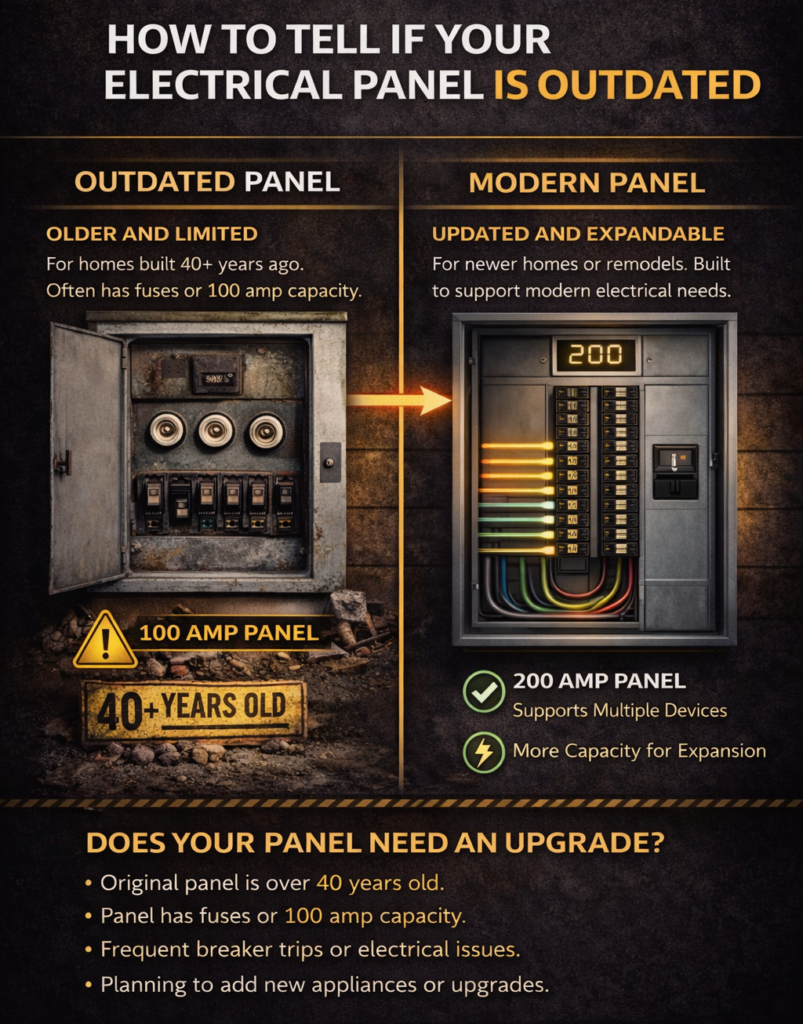
How To Tell If Your Electrical Panel Is Outdated
Electrical panels are built to last for many years, but they are not designed to handle unlimited electrical demand. As homes add new appliances, air conditioning systems, electric vehicle chargers, and other modern equipment, older electrical panels may struggle to keep up. An outdated panel can limit how much electricity a home can safely use and may increase the risk of overloaded circuits or electrical hazards. Many homes in Reno, Sparks, and surrounding Washoe County neighborhoods were built decades ago when electrical usage was far lower than it is today. Recognizing when a panel is outdated can help homeowners determine when an upgrade may be necessary.
Older Panels Common In Reno And Sparks Homes
In many older neighborhoods throughout Reno and Sparks, homes still operate with electrical panels that were installed when the house was originally built. Panels from earlier decades were often designed for 100 amp service or even older fuse-based systems. While these systems may still function, they were not designed for today’s level of electrical use. Modern households rely on far more devices, including kitchen appliances, large televisions, computers, charging stations, and HVAC systems. As a result, older panels may experience more frequent breaker trips or limited circuit capacity compared to newer electrical systems.
When Modern Homes Need A 200 Amp Electrical Service
Today, most modern homes are built with 200 amp electrical service to support higher electrical demand and provide room for future upgrades. A 200 amp panel allows homeowners to safely run multiple appliances, heating and cooling systems, and additional electrical features without overloading the system. In growing areas around Reno, Sparks, Spanish Springs, and Washoe County, many homeowners upgrade their panels when remodeling, installing EV chargers, adding hot tubs, or expanding their homes. Increasing the panel capacity helps ensure the electrical system can safely support the needs of the household both now and in the future.
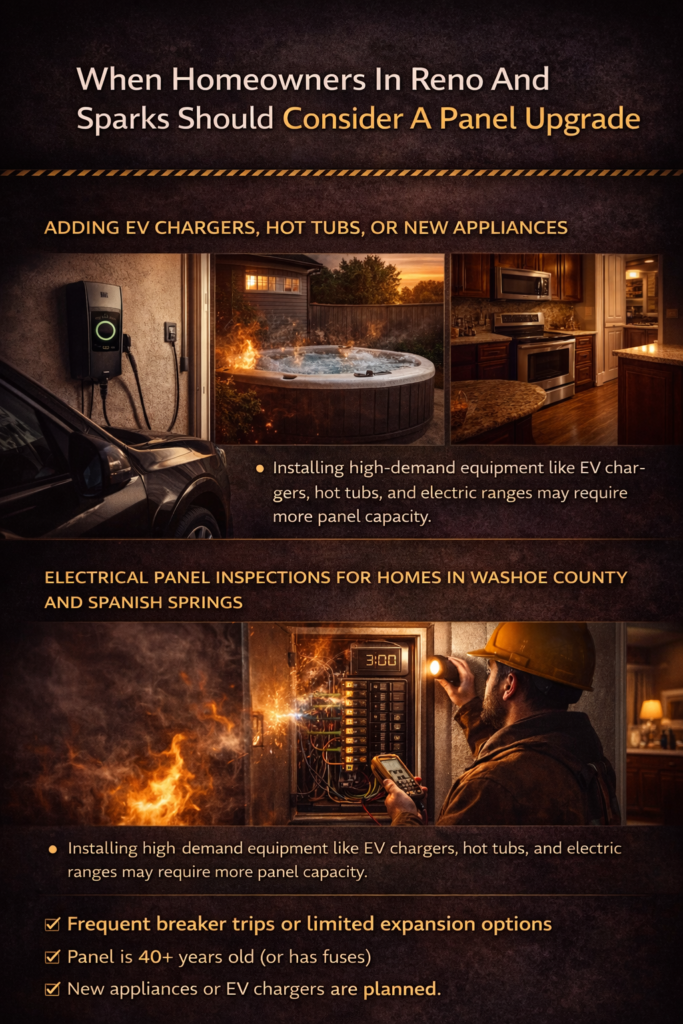
When Homeowners In Reno And Sparks Should Consider A Panel Upgrade
Electrical panel upgrades are often recommended when the power demands of a home begin to exceed what the current system can safely handle. As homes add new technology and appliances, the amount of electricity required to run everything increases significantly. If the panel does not have enough capacity or available circuits, homeowners may start experiencing frequent breaker trips, limited electrical expansion, or safety concerns. In many Reno and Sparks homes, especially those built decades ago, electrical systems were designed for a much lower level of power usage than what modern households require today.
Adding EV Chargers, Hot Tubs, Or New Appliances
One of the most common reasons homeowners upgrade their breaker panel is to support new electrical equipment. Installing an EV charger, hot tub, electric range, or other high-demand appliances often requires dedicated circuits and additional electrical capacity. Without enough space in the panel or sufficient amperage, these upgrades may not be possible without first improving the electrical system. As more homeowners in Reno, Sparks, and Spanish Springs adopt electric vehicles and modern home upgrades, electrical panels are frequently updated to handle the increased load safely.
Electrical Panel Inspections For Homes In Washoe County And Spanish Springs
Regular electrical inspections can help homeowners determine whether their breaker panel is still adequate for their home’s needs. During an inspection, electricians evaluate the panel’s capacity, the condition of the breakers, and the overall load placed on the system. In many cases, electricians discover panels that are nearing their limits or that may not meet modern safety expectations. For homes throughout Washoe County, Reno, and Spanish Springs, having a licensed electrician evaluate the electrical panel can help identify potential issues early and ensure the system remains safe and reliable for years to come.
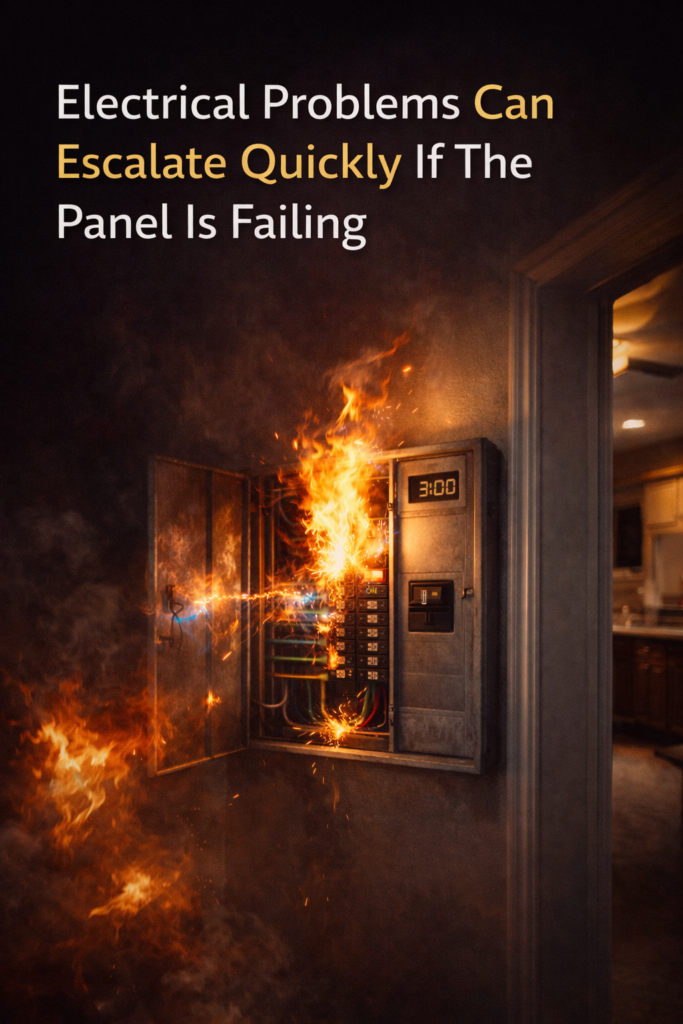
Electrical Problems Can Escalate Quickly If The Panel Is Failing
Electrical panels are designed to protect your home by shutting off power when something goes wrong. But when a panel is overloaded, outdated, or damaged, that protection may not work properly. Loose connections, overheating breakers, and worn components can create dangerous heat inside the panel that may eventually lead to electrical fires. Catching these issues early with a professional inspection can prevent serious damage and keep your home’s electrical system operating safely.
Schedule A Professional Electrical Panel Inspection
If your breakers trip frequently, your lights flicker, or your home still uses an older electrical panel, it may be time to have your system inspected. A licensed electrician can evaluate your electrical load, check for safety issues, and determine whether repairs or a panel upgrade may be necessary to safely power your home.
Call MT Electric For Electrical Panel Service In Reno And Sparks
MT Electric helps homeowners throughout Reno, Sparks, Spanish Springs, and surrounding Washoe County communities keep their electrical systems safe and reliable. Whether you need a panel inspection, electrical repairs, or a full breaker panel upgrade, our team can help ensure your home has the power capacity and safety protection modern households require.