
Electrical Panel Upgrades: When You Need One and What to Expect
Key takeaways
- Upgrade triggers: a full panel, frequent breaker trips, a Federal Pacific or Zinsco label, an insurer flag, or a big new load (generator, EV charger, heat pump, remodel).
- A modern upgrade is typically 200-amp service, with the service entrance and grounding brought to code.
- It almost never means rewiring the whole house — branch circuits stay unless they’re genuinely unsafe.
- Permit, inspection, and utility coordination are part of every legitimate panel job.
Your electrical panel is the heart of your home’s electrical system — every circuit runs through it, every amp is managed by it. Most homeowners never think about theirs until something forces the conversation: a generator install, an EV charger, an appliance that keeps tripping breakers, or an insurance company flagging it at renewal. If any of that sounds familiar, here’s what you need to know.
What the Panel Actually Does
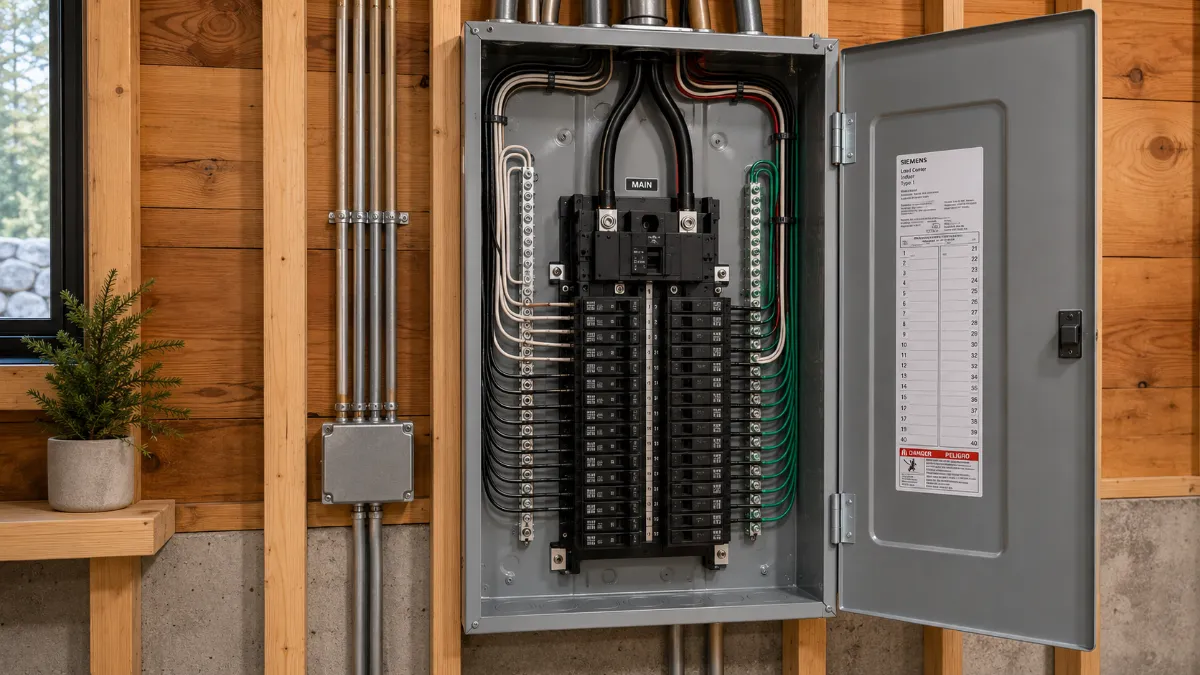
The panel takes utility power and distributes it to every circuit in the house, each protected by a breaker that trips when a load exceeds what its wiring safely handles. Most older homes in the Tahoe and Carson City area run 100- or 150-amp panels; newer construction is built at 200. That difference matters more than it used to — the loads on a modern home have changed dramatically in twenty years.
Signs Your Panel Needs Attention
You’re Out of Space
Every slot full and a new circuit needed — for a generator, an EV charger, a hot tub, a shop, a remodel. Tandem breakers can sometimes buy a slot or two, but they have limits, and not every panel accepts them.
Breakers Trip Regularly
An occasional trip is the system working. Frequent resets, or the same appliance combination reliably killing a circuit, is the panel telling you something — an overloaded circuit, a failing breaker, or a service that can’t carry the house anymore.
The Label Says Federal Pacific or Zinsco
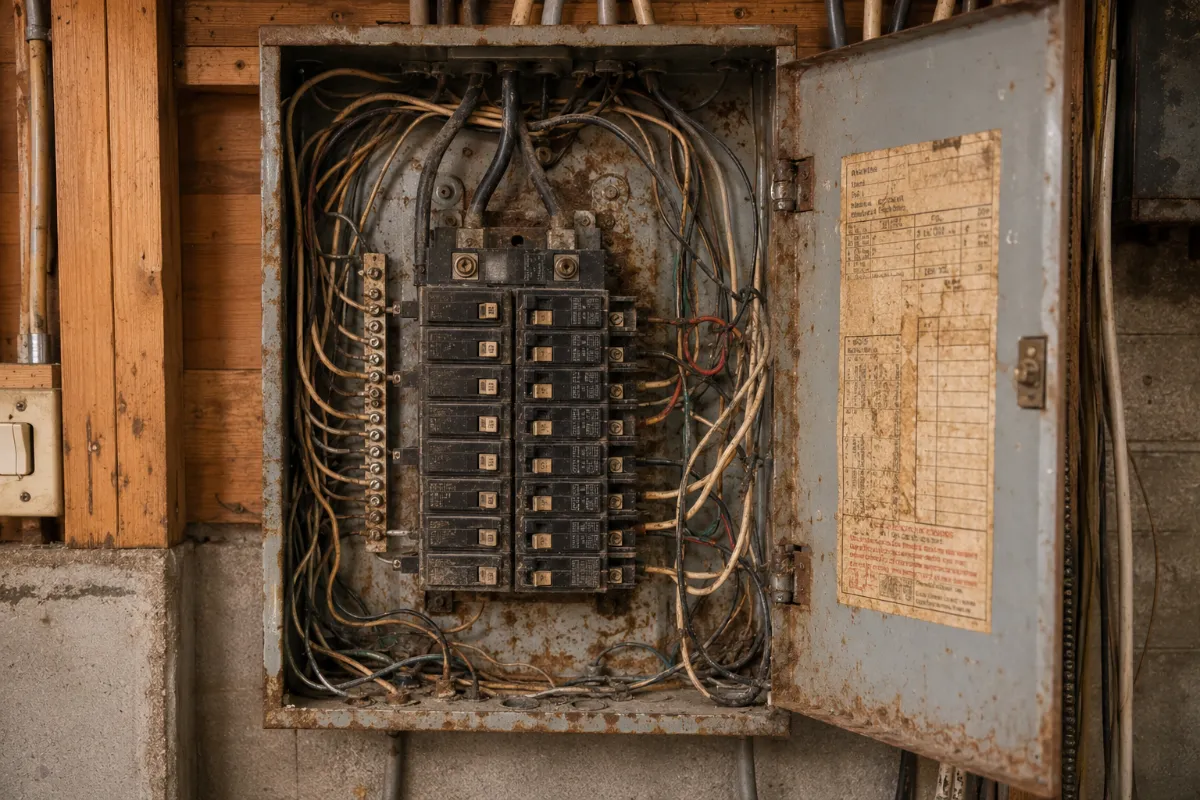
If your panel says Federal Pacific, Stab-Lok, or Zinsco: these brands, installed widely from the 1950s through the 1980s, have documented breaker failure rates — they can fail to trip under fault, which is the one job a breaker has. Many insurers won’t write or renew coverage on homes carrying them. Replacement isn’t optional maintenance; it’s a safety issue.
Your Insurer Flagged It
Carriers are scrutinizing panels hard, especially in wildfire-exposed areas like the Tahoe basin. Outdated, undersized, or known-problem panels increasingly show up as conditions of coverage.
You’re Adding a Major Load
Standby generator, EV charger, heat pump, garage subpanel, big remodel — the time to address the panel is during that project, not after equipment is installed that the service can’t support.
What an Upgrade Actually Involves
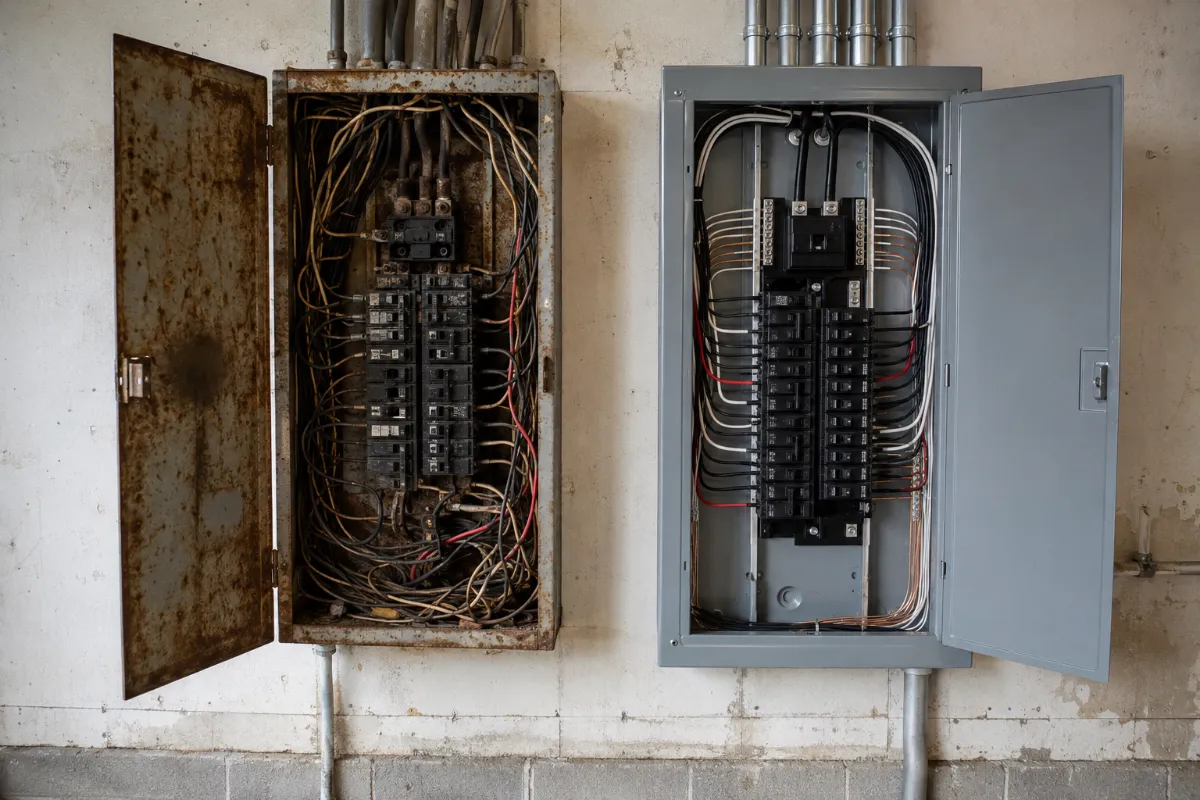
The panel: old equipment out, new 200-amp panel in — labeled, organized, built to current code, with room for what’s next.
Meter and service entrance: moving from 100 to 200 amps usually means the meter base and service entrance cable come up to the new capacity too, coordinated with NV Energy for the disconnect and reconnect.
Grounding and bonding: older homes routinely carry undersized grounds, missing bonding jumpers, or long-corroded ground rods. The upgrade brings all of it to standard.
Permit and inspection: non-negotiable, and there to protect you — the inspector verifies everything before the utility reconnects.
Do You Have to Rewire the Whole House?
Usually, no. The upgrade replaces the distribution point and service entrance; branch circuits stay as long as they’re safe. If we open things up and find damage or code problems, we document them and scope that work separately — and if the home carries aluminum branch wiring or knob-and-tube, we’ll walk you through what actually needs addressing and why.
Concealed Conditions, Honest Change Orders
Occasionally a panel opens up and reveals what nobody could see: corroded bus bars, overheated connections, improvisations from decades past. When that happens we document it, explain it, and price it as a separate change order for your approval before proceeding. You will never find a surprise on the invoice.
What the Job Looks Like
A straightforward 200-amp upgrade is one crew on site: old panel out, new panel set, service entrance and grounding brought to code, every circuit landed and labeled — with permitting and utility scheduling on either end. Complex situations — meter opposite the panel, new service mast, underground lateral — add work, and the proposal lays it out before we start.
Why It Matters More Now
Twenty years ago 100 amps handled a household fine. Today — EV charging, heat pumps, home offices, induction cooking, standby power — it doesn’t go nearly as far. And with the changes happening on the grid side, a panel that supports your home’s current and future loads is an investment in safety, insurability, and resale value all at once.
Getting Started
Not sure where your panel stands? We’ll evaluate the panel, service entrance, and grounding, tell you honestly where you are, and whether an upgrade makes sense — free, no pressure. Already planning a generator, EV charger, or remodel? The panel conversation happens inside that project scope, where it belongs. Reno-area homeowners can dig deeper in our Reno Panel Upgrade Guide.
One free evaluation tells you exactly where your panel stands.
Book My Panel EvaluationCall (775) 309-9056Quick Answers
How Much Does an Electrical Panel Upgrade Cost?
It depends on service size, panel location, and the condition of the service entrance — which is why we price it from an on-site look rather than guessing by phone. The evaluation is free, and Reno-area homeowners can start with our Reno Panel Upgrade Guide.
Do I Need a Permit for a Panel Upgrade?
Yes — every panel upgrade requires a permit and a final inspection, plus utility coordination on the disconnect and reconnect. We handle the entire chain; it protects your insurance and your resale.
How Long Is the Power Off During the Upgrade?
Power is off while the old panel comes out and the new one goes in. The utility disconnect and reconnect are scheduled in advance, so the outage window is planned around a day you chose, not open-ended.
Are Federal Pacific and Zinsco Panels Really Dangerous?
Their breakers have documented failure-to-trip records — the one job a breaker exists to do — and many insurers now refuse or surcharge homes carrying them. If your label says Federal Pacific, Stab-Lok, or Zinsco, replacement is a safety issue, not a style choice.