
Backup Generator Installation in Reno, Nevada
When a Sierra storm or a wind-driven shutoff takes the grid down, a standby generator brings your house back in seconds — automatically, whether you’re home or not. Installed, permitted, and backed by a 3-year manufacturer warranty.
Reno Outages Aren’t Hypothetical
Ask anyone who’s lived here through a few winters: the Washoe Zephyr bends trees into power lines, Sierra storms ice the grid, and in fire season NV Energy’s Public Safety Outage Management program shuts power off on purpose when wind and dry fuel line up — planned outages that can run from hours into days. Meanwhile the house needs what it needs: the refrigerator, the furnace (gas furnaces still need electricity to run), the garage door, the home office, the well pump if you’re on the outskirts.
Automatic in Seconds — Whether You’re Home or Not
A standby generator monitors utility power around the clock. When the grid drops, the automatic transfer switch isolates your home, the generator starts itself, and the lights are back typically within half a minute — no extension cords, no gas cans, no being there. When utility power returns, it hands back and shuts down on its own.
Sized for Reno — Including the Altitude
Here’s the detail flatland sizing guides miss: at Reno’s elevation, roughly 4,500 feet, an air-breathing engine gives up a few percent of its rated output. A generator sized to the brochure back East can come up short on a July afternoon in Somersett. We size from your actual loads with the altitude derate included — so the capacity you paid for is capacity you actually have.
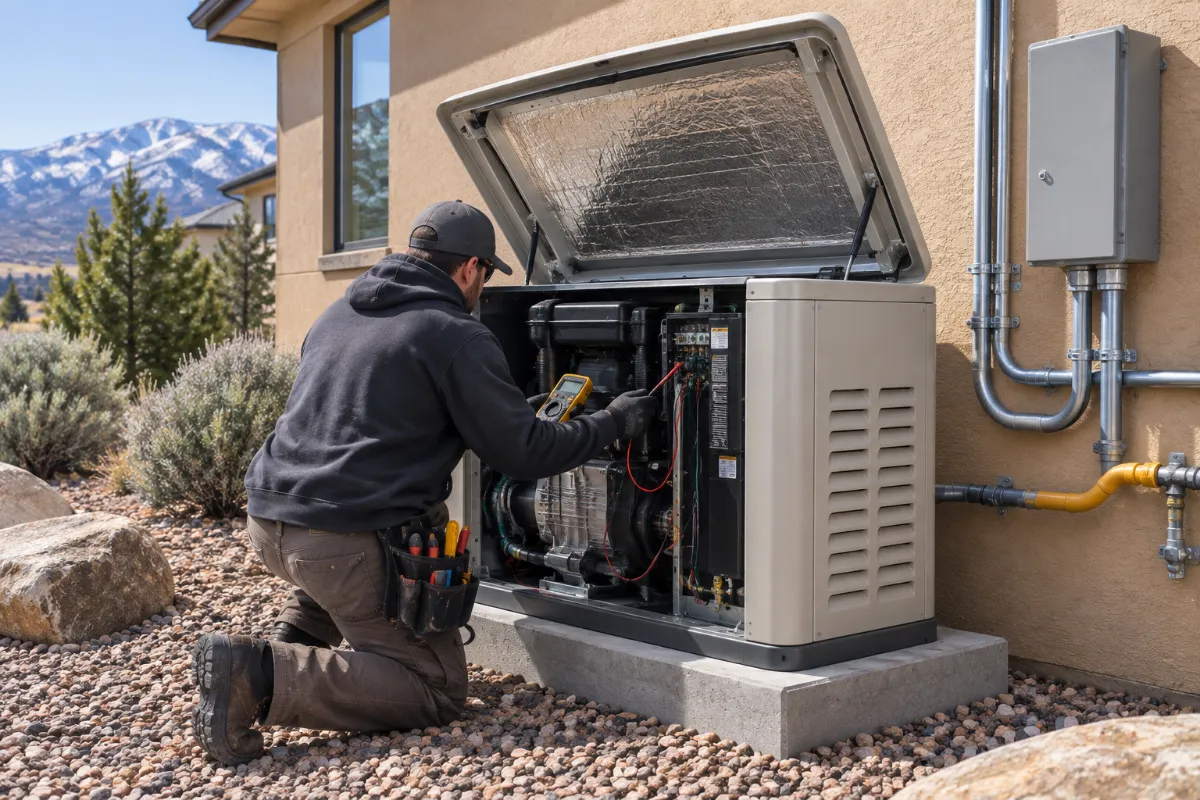
The best day to size a generator is a calm one. The worst is the third day of an outage.
Generator Services We Provide in Reno
From keeping the essentials alive to backing up the whole house, the right system starts with what you actually need powered — and an honest conversation about what that takes.
Whole-Home Standby Generators in Reno
A whole-home standby system means the outage happens to the neighborhood, not to you — HVAC, kitchen, well pump, home office, garage door, all of it carries on. We size from a full load calculation with Reno’s altitude figured in, set the unit on its pad along the side yard, and fuel it from your natural gas line or a propane tank sized for multi-day events.
Sized With Reno’s Altitude in the Math
At roughly 4,500 feet, an air-breathing engine quietly gives up a few percent of its nameplate rating — and a July afternoon with the AC starting hard is exactly when you’d find out. We derate for elevation, account for motor start-up surges, and size the unit so its worst day still covers yours.
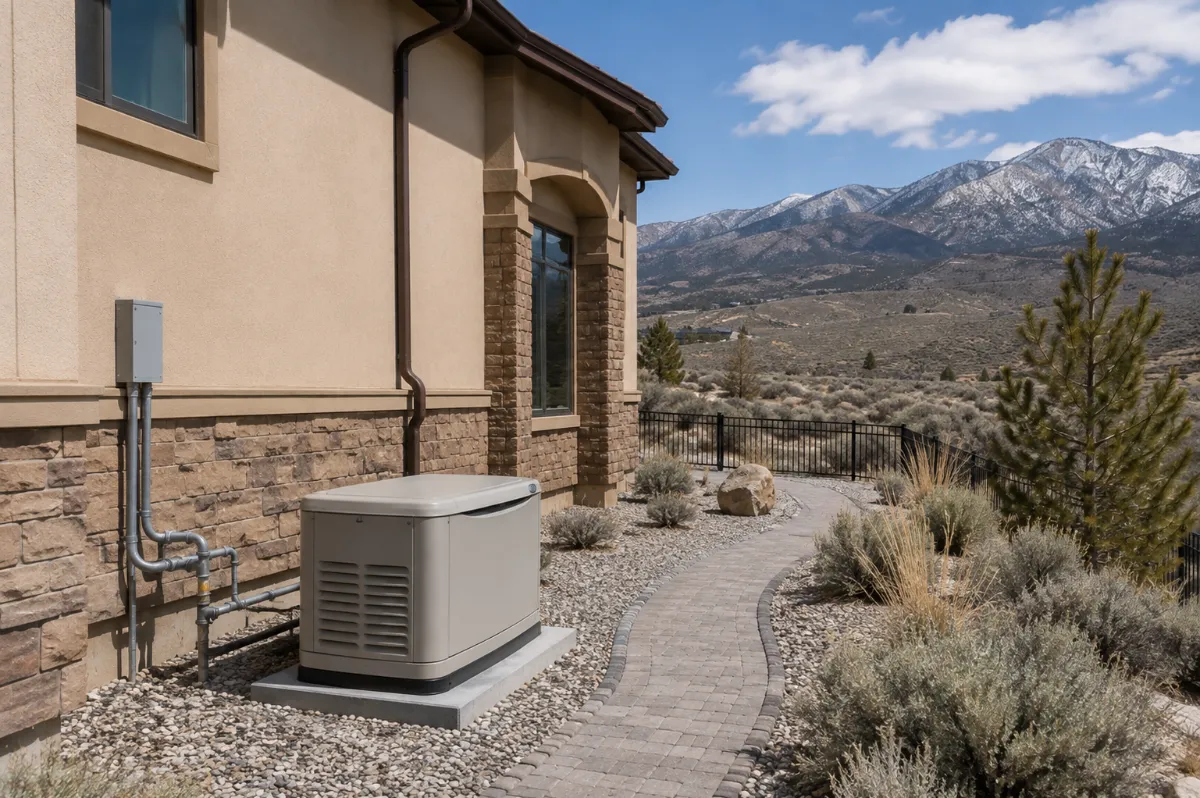
Essential-Load Backup Systems
Not every home needs every circuit backed up. An essential-load system pairs a smaller generator with a managed panel that keeps what matters alive — the furnace, the refrigerator, the well pump, the internet, the outlets you actually use — at a meaningfully lower cost than whole-home coverage. For a lot of Reno families it’s the sweet spot.
Most of the Security, a Fraction of the Cost
The design conversation is a walk through your house: what must stay on, what can wait, what surprised you in the last outage. We wire those circuits to the managed panel — and if life changes, a home office or medical equipment or a bigger freezer, the system grows with a visit, not a redesign.

Transfer Switches & Panel Integration
The automatic transfer switch is where the generator meets your home — it senses the outage, isolates your house from the grid, and hands the load to the generator in seconds. That isolation isn’t a nicety: it’s what keeps your generator from backfeeding the lines NV Energy crews are working on. This is licensed-electrician territory, and it’s the part we sweat.
The Handoff That Has to Be Flawless
We wire the transfer switch into your existing panel — or pair the generator with a panel upgrade when the old equipment has earned it — then program the weekly self-test and walk you through the controls. The system exercises itself, reports faults early, and transfers cleanly whether you’re home or three states away.
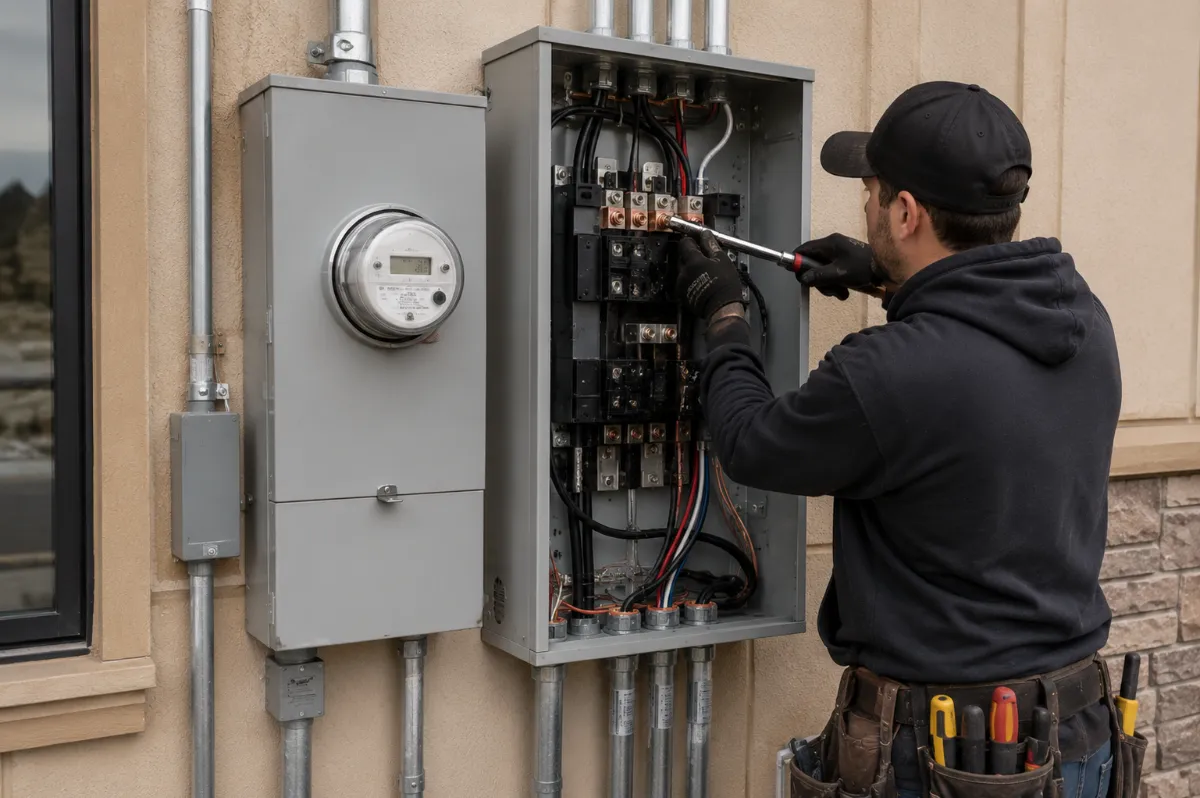
What Reno Homeowners Put on the Backup List
- Furnace and ignition — a gas furnace is dead without electricity
- Refrigerator and freezer — outages outlast ice chests
- Well pump — no power means no water outside city lines
- Medical equipment, CPAP, and home-care devices
- The home office that now earns the mortgage
- Garage door, gate, and exterior lighting
- Sump or sewage ejector pumps where grade demands them
- EV charging, if the driveway is where you refuel
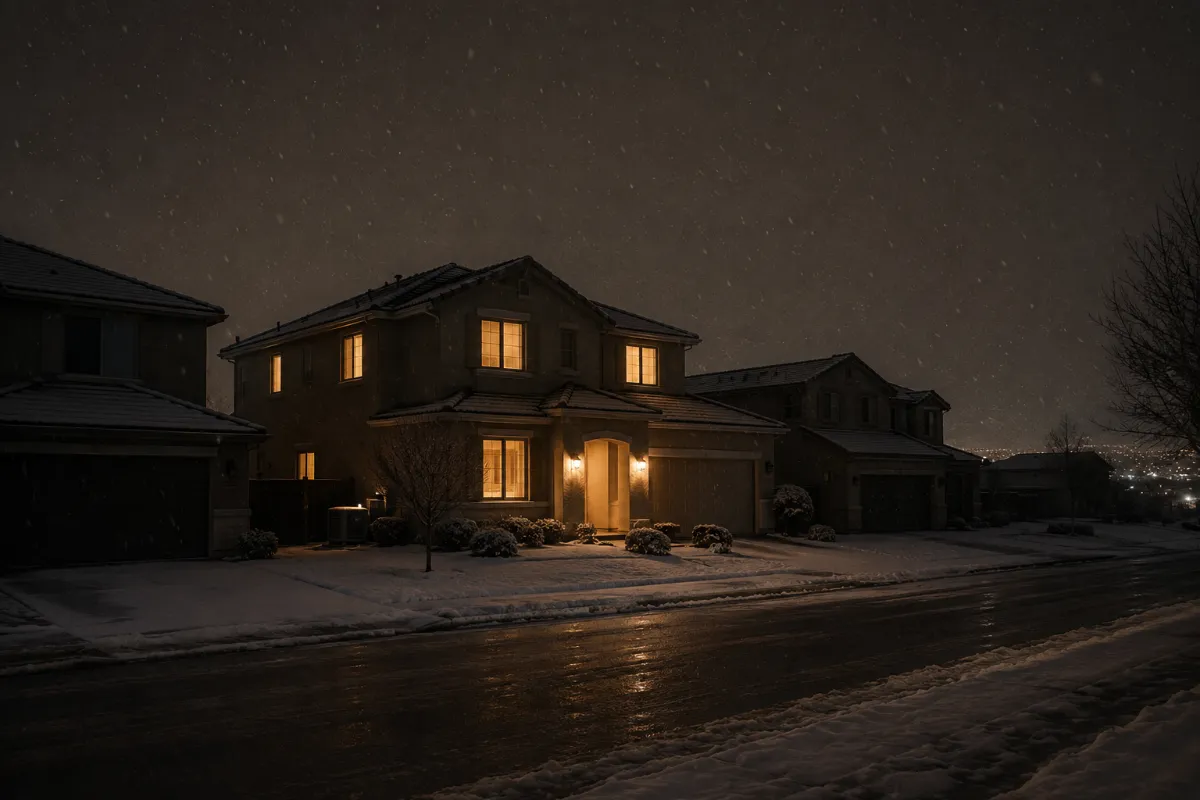
How a Generator Install Works with MT Electric
Home Assessment & Sizing
We walk your loads, talk through what must stay on versus what’s nice to have, run the altitude-adjusted sizing, and put together a clear quote. Want a head start? Try our Generator Estimator.
Permits & Fuel Coordination
City or county permit, HOA placement approvals where needed, and coordination on the natural gas or propane connection — handled before the first shovel.
Installation
Pad set, gas line run, transfer switch wired, generator placed and connected. We leave the site clean and the system live.
Startup, Test & Warranty
We simulate an outage, verify the transfer, walk you through the controls and the self-test schedule, and register your generator’s 3-year manufacturer warranty.
Why Reno Homeowners Choose MT Electric
Backed by 3-Year Manufacturer Warranties
The equipment we install carries a 3-year manufacturer warranty — and because improper installation is the classic reason warranty claims get denied, our licensed, permitted, code-exact work is what keeps that coverage valid. We register it and document it for you.
Licensed, Local, and Code-Exact
Licensed electricians who work to the NEC and the local amendments Reno and Washoe County actually enforce. Permits pulled, circuits labeled, inspections passed — the paper trail that protects your insurance, your resale, and your family.
Upfront Pricing, On-Time Crews
Clear, transparent pricing with no hidden fees or surprise line items — you always know what to expect before work begins. And a crew that shows up when we said it would, because your day matters too.
Storm season and fire season split the Reno calendar between them. A standby generator answers both.
Projects That Pair with a Generator
Generator installs touch the panel and change how your home uses power. Worth reading next:
Electrical Panel Upgrades in Reno
An aging or overstuffed panel complicates a transfer switch. If yours is on the edge, one coordinated project beats two separate ones.
EV Charger Installation in Reno
If the driveway is your gas station, backup power matters more, not less — and generator sizing should know the charger exists.
All Backup Generator Services
Sizing guides, fuel options, and everything else we do with standby power across Northern Nevada.
Serving Reno and All of Northern Nevada
We install standby generators throughout Reno — from Somersett and Caughlin Ranch on the wind-facing west side to Damonte Ranch, Spanish Springs, and rural properties on wells — and across the region:
Generator Questions We Hear in Reno
What Size Generator Does My Reno Home Need?
Most Reno homes land in the 14-to-26-kilowatt range, but the real answer is a load calculation: what must stay on, what cycles, and what the surge draws look like — with a few percent added for Reno’s altitude, which quietly derates every air-breathing engine. We size from your actual house, not a zip-code chart, and our online Generator Estimator gives you a useful first number.
How Much Does a Standby Generator Cost Installed in Reno?
Most residential standby installations run between $10,000 and $25,000 turnkey — unit, pad, gas connection, transfer switch, permits, and startup. A 22-kilowatt whole-home system typically lands between $14,000 and $19,000 installed. Your quote comes from a home assessment; our Generator Estimator gives you a starting point before we come out.
Natural Gas or Propane?
If your neighborhood has natural gas service — most of Reno proper does — it’s usually the answer: no tank, no refills, indefinite runtime. Properties past the gas lines in Washoe Valley, Palomino Valley, and the outskirts run propane, and we size the tank connection for realistic multi-day outages.
How Fast Does a Standby Generator Kick In?
Typically within about 10 to 30 seconds of the outage. The transfer is automatic — the system senses the loss, starts, and switches on its own, whether you’re in the living room or out of state.
Will It Power My Whole House?
It can — that’s a whole-home system, sized to your full load. Many Reno families land on an essential-load system instead: a smaller unit covering the furnace, kitchen, water, and office at a meaningfully lower cost. We price both paths so it’s your call, made with real numbers.
What About NV Energy’s Public Safety Shutoffs?
Those planned de-energizations during high-wind, high-fire-risk weather are exactly what standby generators handle best — the outage is real, sometimes long, and your generator treats it like any other one: starts in seconds, runs until the grid is back.
Do I Need a Permit — and Will My HOA Object?
A permit, yes — placement, gas, and electrical are all inspected work, and we handle it. HOAs mostly care about placement and sound; modern units in sound-attenuated enclosures run about as loud as a central AC unit, and we prepare the placement drawings approval committees want to see.
One call. One licensed local crew. Upfront pricing, no surprises.